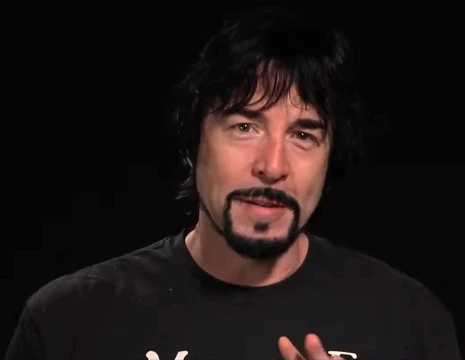
William Blake
English poet, painter, and printmaker of the Romantic Age.

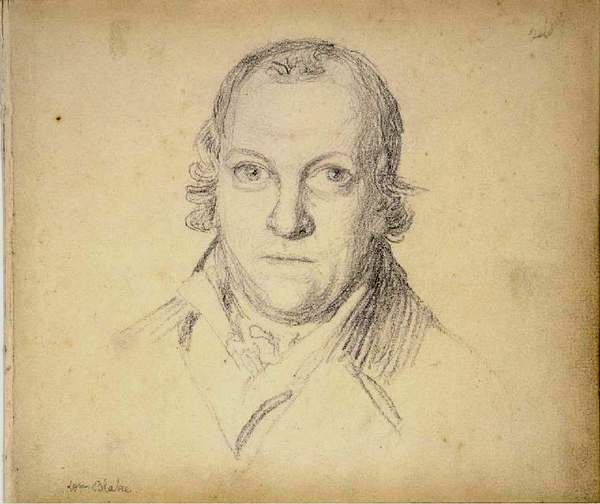
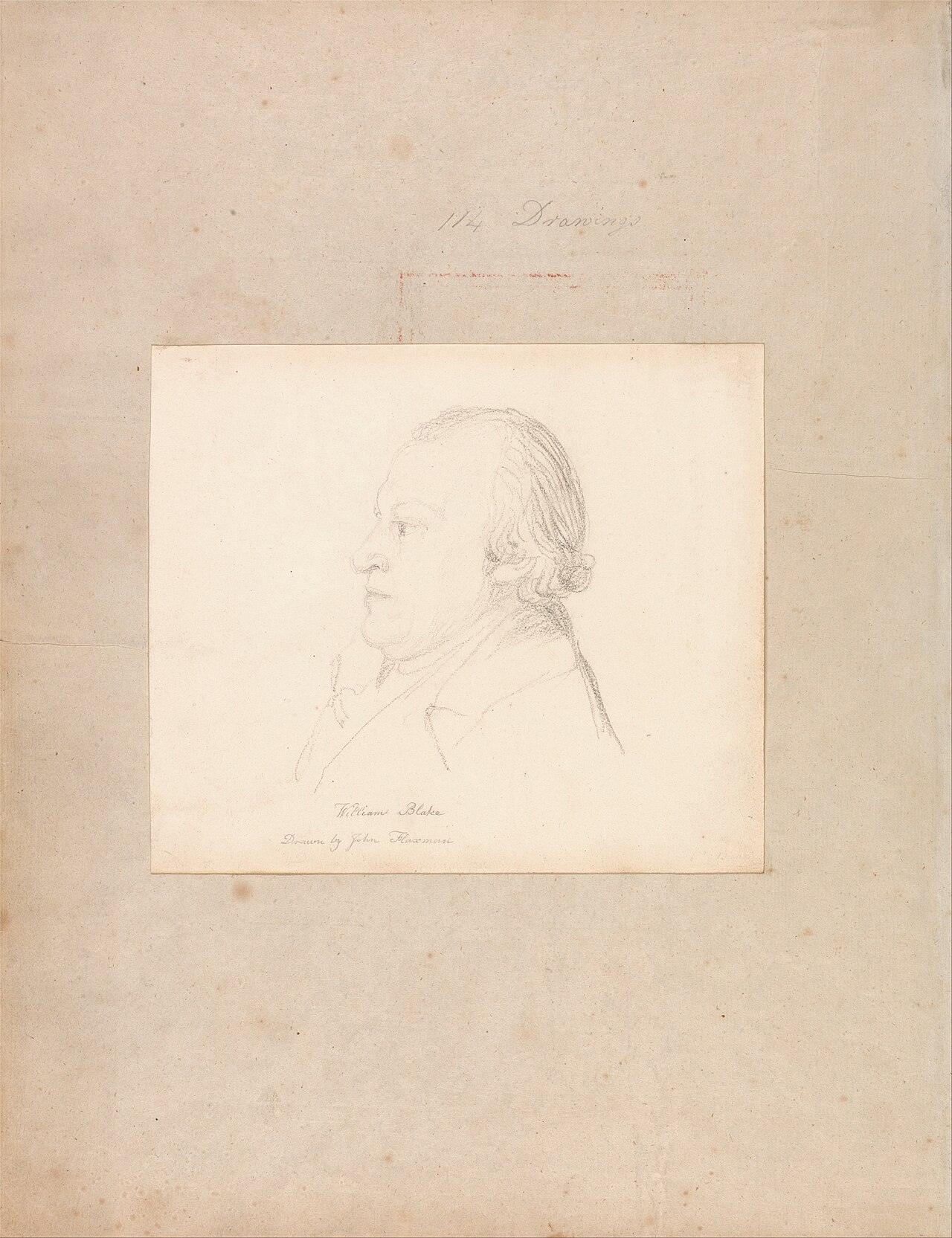
John Flaxman Jr. · Public domain
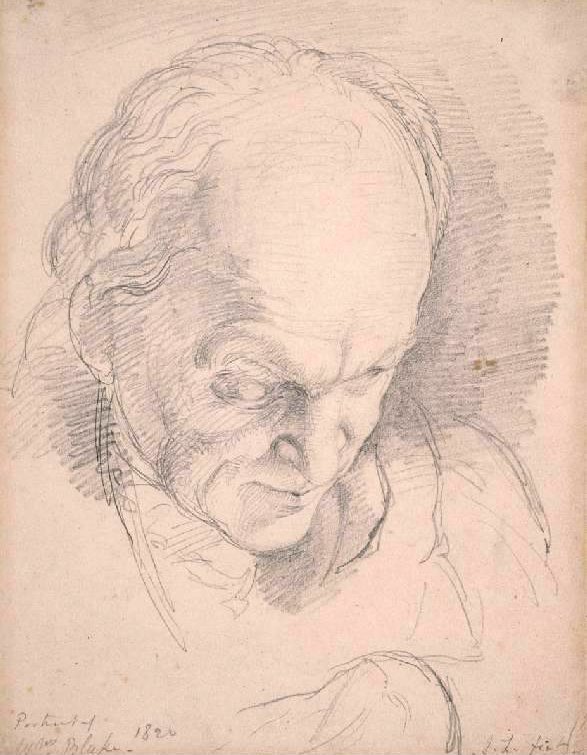
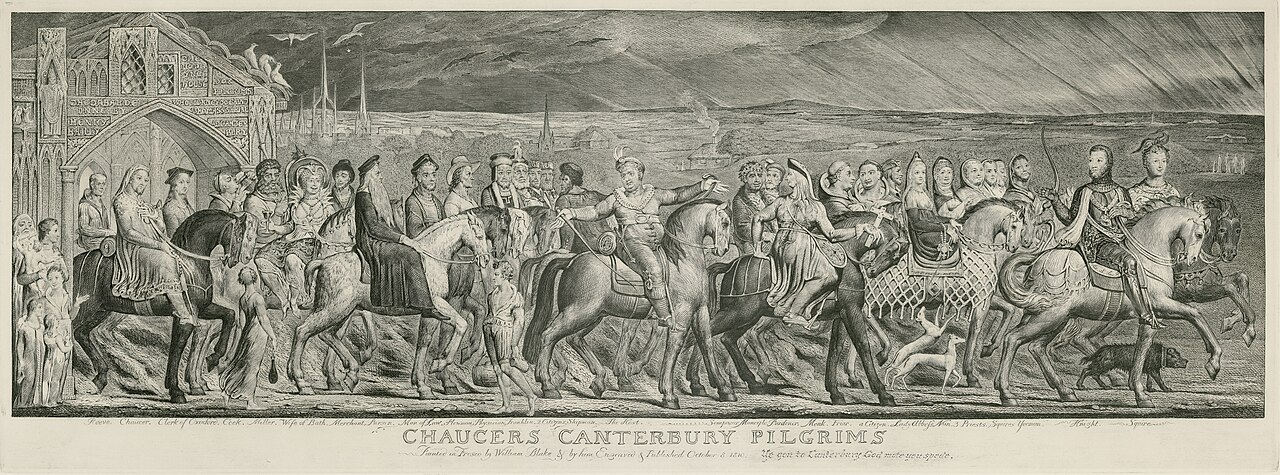
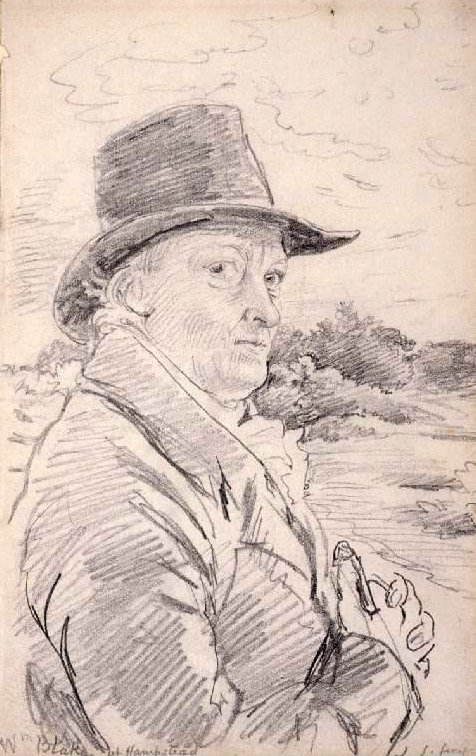
William Blake (28 November 1757 – 12 August 1827) was an English poet, painter and printmaker. Largely unrecognised during his life, Blake has become a seminal figure in the history of the poetry and visual art of the Romantic Age. What he called his 'prophetic works' were said by the 20th-century critic Northrop Frye to form 'what is in proportion to its merits the least read body of poetry in the [English] language.' While he lived in London his entire life, except for three years spent in Felpham, he produced a diverse and symbolically rich collection of works, which embraced the imagination as 'the body of God', or 'human existence itself.'
- born
- 28 November 1757
- died
- 12 August 1827
- field
- Poetry, painting, printmaking
- nationality
- English
- known_for
- Prophetic works, Romantic poetry and visual art, illuminated books
Lore & Background
William Blake was born on 28 November 1757 at 28 Broad Street (now Broadwick Street) in Soho, London. He was the third of seven children, two of whom died in infancy. His father James was a hosier. William attended school only long enough to learn reading and writing, leaving at the age of 10, and was otherwise educated at home by his mother Catherine Blake (née Wright). He was baptised on 11 December at St James's Church, Piccadilly, London. The Bible was an early and profound influence. Blake's childhood included mystical religious experiences such as 'beholding God's face pressed against his window, seeing angels among the haystacks, and being visited by the Old Testament prophet Ezekiel.' He started engraving copies of drawings of Greek antiquities purchased for him by his father. At age 10 he enrolled in drawing classes at Henry Pars's drawing school in the Strand. On 4 August 1772 Blake was apprenticed to engraver James Basire of Great Queen Street for a term of seven years. After two years, Basire sent his apprentice to copy images from the Gothic churches in London, particularly Westminster Abbey, which helped form his artistic style. On 8 October 1779, Blake became a student at the Royal Academy in Old Somerset House. There he rebelled against what he regarded as the unfinished style of fashionable painters such as Peter Paul Rubens, championed by the school's first president Joshua Reynolds. In June 1780, Blake was walking towards Basire's shop in Great Queen Street when he was swept up by a rampaging mob that stormed Newgate Prison during the Gordon Riots; he was reportedly in the front rank of the mob during the attack. He married Catherine Boucher on 18 August 1782 in St Mary's Church, Battersea. She became his collaborator as a printmaker and colourist, enabling him to realize numerous projects.
Reader's Guide
William Blake's significance lies in his singular, visionary body of work that defies easy classification. Although considered mad by contemporaries for his idiosyncratic views, he came to be highly regarded by later critics and readers for his expressiveness and creativity, and for the philosophical and mystical undercurrents within his work. His paintings and poetry have been characterised as part of the Romantic movement and as 'Pre-Romantic.' He was hostile to the Church of England (indeed, to almost all forms of organised religion), and was influenced by the ideals and ambitions of the French and American Revolutions, although later he rejected many of these political beliefs. He maintained an amicable relationship with the political activist Thomas Paine and was also influenced by thinkers such as Emanuel Swedenborg. The 19th-century scholar William Michael Rossetti characterised him as a 'glorious luminary' and 'a man not forestalled by predecessors, nor to be classed with contemporaries, nor to be replaced by known or readily surmisable successors.' Collaboration with his wife Catherine Boucher was instrumental in the creation of many of his books. Literary scholar Angus Whitehead writes: 'For almost forty-five years she was the person who lived and worked most closely with Blake, enabling him to realize numerous projects, impossible without her assistance. Catherine was an artist and printer in her own right.'
Did You Know?
- Blake was baptised on 11 December at St James's Church, Piccadilly, London, even though his family were Moravians and English Dissenters.
- As a child, Blake claimed to have seen angels among the haystacks and been visited by the Old Testament prophet Ezekiel.
- Blake knocked a boy off a scaffold to the ground at Westminster Abbey after the boy tormented him; the schoolboys' privilege to enter the Abbey was withdrawn after Blake complained to the Dean.
- Catherine Boucher, Blake's wife, was illiterate and signed her wedding contract with an X.
- Blake was reportedly in the front rank of the mob that stormed Newgate Prison during the Gordon Riots in June 1780.
Gallery
Frequently Asked Questions
Who is William Blake?
He was an English poet, painter, and printmaker born in London on 28 November 1757 who spent nearly his whole life in the city, apart from a brief three-year stay in Felpham. He is remembered as a central figure of the Romantic Age whose visionary output spanned poetry, visual art, and bookmaking.
What is William Blake most famous for?
Blake is celebrated for his prophetic works and his illuminated books, in which he hand-engraved text and imagery together on a single page. His creative philosophy treated the human imagination as something sacred, essentially the physical embodiment of the divine.
How did William Blake's life end?
He passed away in London on 12 August 1827 at the age of sixty-nine. Despite his towering later reputation, he was largely overlooked and unrecognised by the literary and artistic establishment while still alive.
Why is William Blake important to literature and art?
He became a seminal influence on both Romantic poetry and visual art, even though critics like Northrop Frye observed that his prophetic verse remains one of the least-read bodies of English poetry relative to its quality. His work bridged the literary and visual worlds in a manner genuinely unprecedented for his era.
What made Blake's creative process unique?
Rather than separating text from illustration, he personally engraved both the words and the accompanying images onto a single page, producing what are known as illuminated books. This gave his works a deeply symbolic, unified quality that set them apart from the printed poetry of his contemporaries.
More in Literary Giants 25-30
Elsewhere in the Literary Giants universe
Spotted an error? Know more?
This is a living reference — every entry is fact-audited, and reader corrections feed straight into our audit queue. Suggest an edit · See this site's audit record